

- SpaceTech
- News
- News Details
- Stable optical clocks for GNSS: the Galileo Iodine Clock
Stable optical clocks for GNSS: the Galileo Iodine Clock
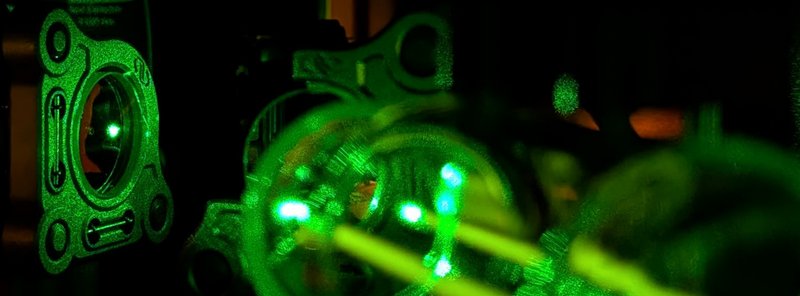
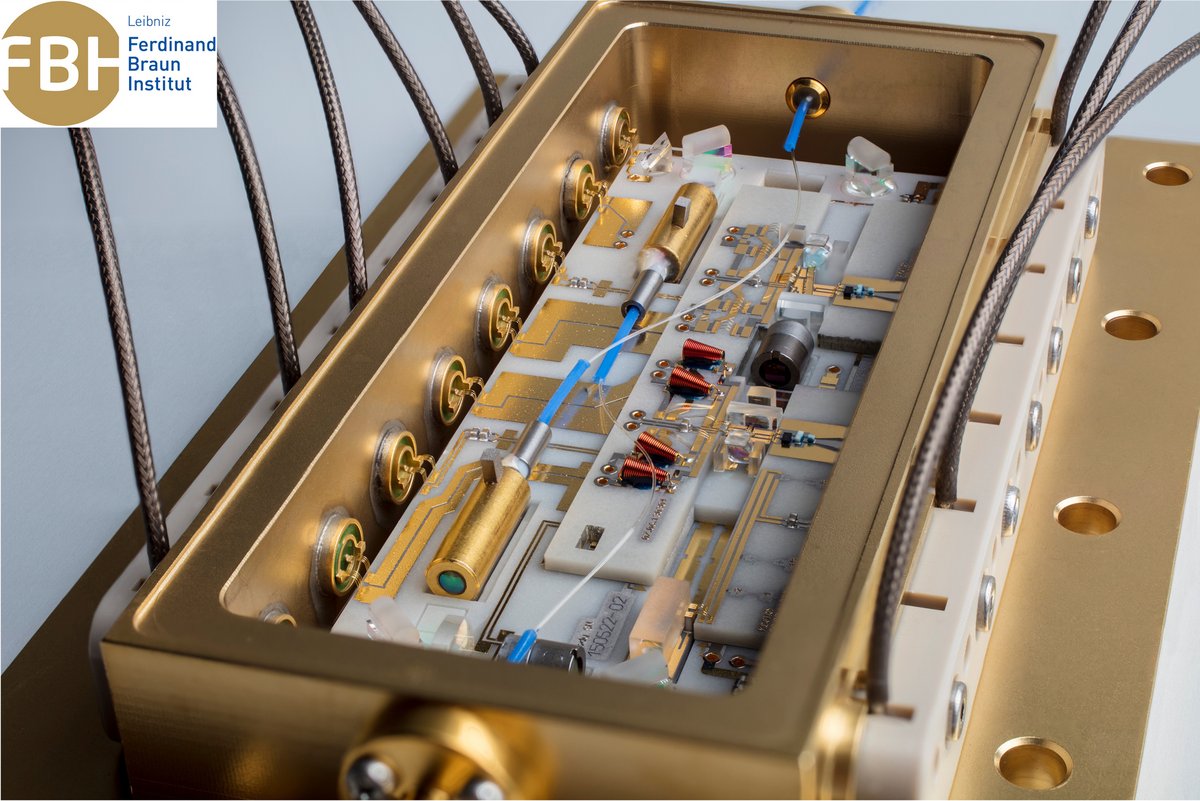
STI is leading the development of the Galileo Iodine Clock, together with its partners, advancing optical clock technology for future Galileo satellites. Menlo Systems contributes the space‑qualified frequency comb, FBH delivers the micro‑integrated laser module, and DLR QT provides scientific support in iodine‑based clock technology, including verification of the clock’s performance.
Introduction
An optical iodine-based clock is being developed within the Galileo/EGNOS Upstream Research and Development Programme under Horizon Europe. Atomic and molecular reference transitions enable compact, high-performance optical clocks and pave the way for next-generation frequency standards in satellite navigation. With this development, we aim to bring optical clock technology onto future Galileo satellites.
The Galileo iodine optical clock uses a molecular-iodine transition that provides narrow, long-term stable and environmentally robust spectral features at room temperature, making it a well-established reference for laser frequency stabilization.
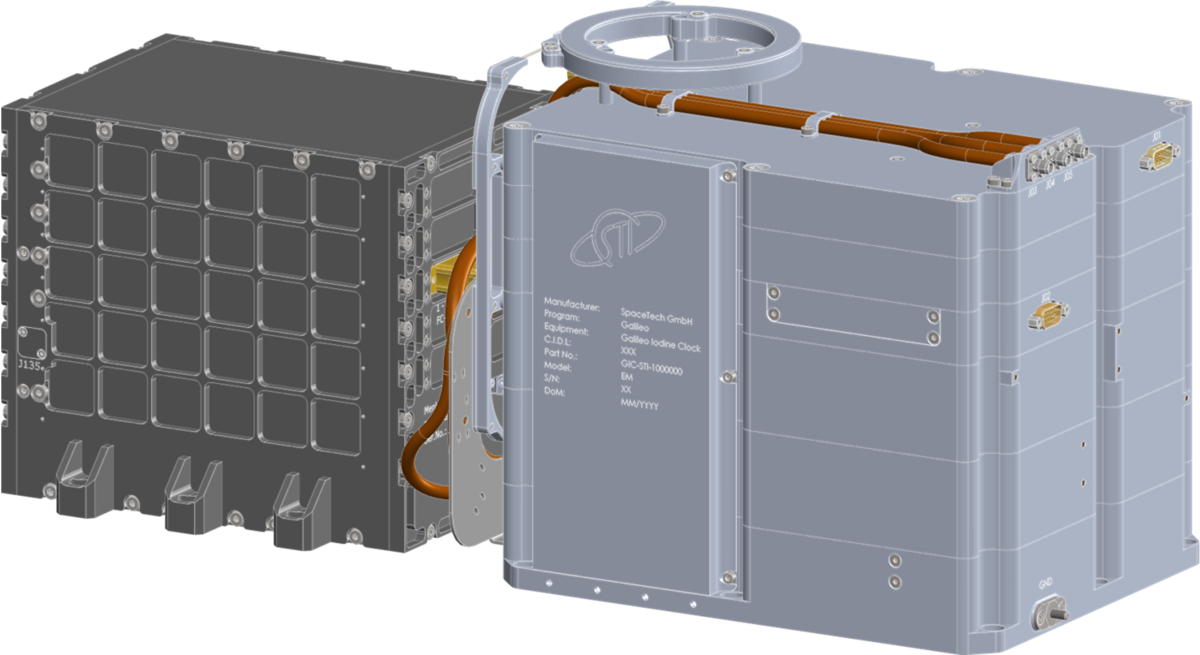
The clock is specifically engineered to withstand the mechanical stresses encountered during launch and to operate reliably under vacuum conditions. The overall design is based on Class 1 electronics, and a full qualification campaign is planned.
Design
The system consists of two main units: the Iodine Spectroscopy Unit built by STI and a fiber-based frequency comb from Menlo Systems. In the spectroscopy module, the micro-integrated diode laser from FBH is stabilized to a transition in iodine vapor using Doppler-free modulation-transfer spectroscopy. This stabilized optical signal
is transferred to the RF domain via the frequency comb which is phase-locked to the stabilized laser. By dividing the optical frequency, the comb generates a highly stable microwave clock signal which is delivered to the satellite’s clock-monitoring unit.
Performance
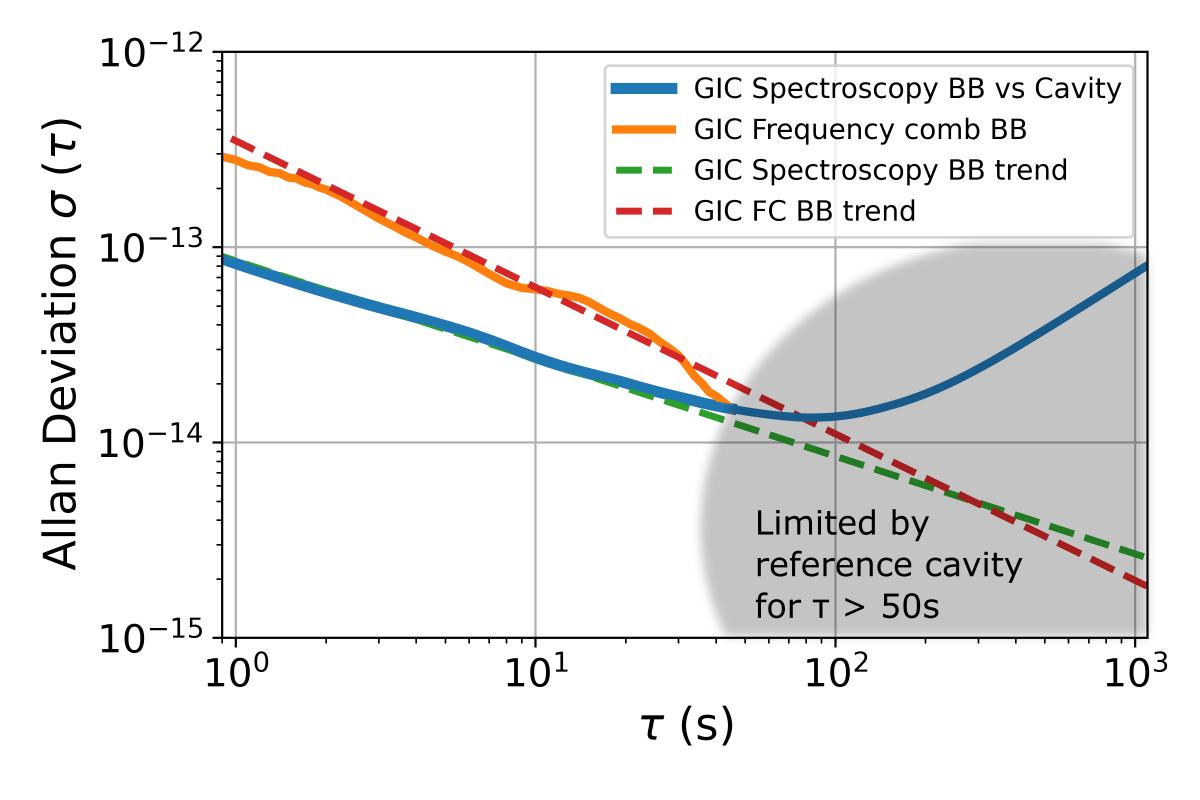
The system is designed in a compact form factor to meet the Size Weight and Power (SWaP) constraints imposed by the satellite. A
long-term stability on the order of <1x10⁻¹³/√τ and a daily performance
level in the low 10-15 range is targeted. Breadboard measurements of both the spectroscopy setup and the frequency comb demonstrate performance consistent with these objectives.
Next Steps
The project is currently in the engineering model phase and aims to deliver an engineering qualification model (EQM) and an experimental flight model (exp FM) for integration into a second generation Galileo satellite.
This activity is funded by the European Union. Views and opinions expressed are however those of the author(s) only and the European Commission and/or EUSPA and/or ESA cannot be held responsible for any use which may be made of the information contained therein.

